Bundesliga action returns, but the Allianz Arena always has its own story to tell
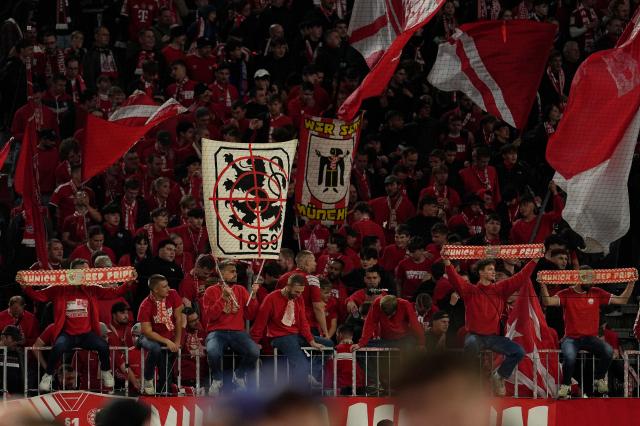
| Photo by Leonhard Simon/Getty Images |
Attention now turns to the Bundesliga, more specifically Bayern Munich’s encounter with 1. FC Köln at the Allianz Arena, following the final international break of 2026. Yet the stadium took my thoughts elsewhere this week. Two decades prior, in fact. All the way back to the very club that used to share and even own the rights to half of it, something German football enthusiasts are likely aware of but not necessarily casual viewers from further afield. Experiencing immense financial difficulties, TSV 1860 Munich agreed to sell its 50% stake for €11 million. With this turn of events satisfying DFB liquidity requirements, the team was allowed to compete in 2. Bundesliga during the 2006/2007 campaign.
Consequently, arrangements were made to remain in Fröttmaning as a tenant under an agreement running until 2025. Exorbitant costs, approximately €3.5 million per season, placed enormous strain on the second-tier side until they finally ran out of road with relegation to the third tier and a compounding demotion to the fourth all in the summer of 2017. Despite the venue’s exterior lights turning red from that point on, it still reminds us of two very different entities now operating at each end of the footballing spectrum. One remains a behemoth fighting for titles on all fronts, while the other navigates an unpredictable present in the hope of a more certain future.
Boardroom tensions and broken promises were the eventual fruits of a partnership with Jordanian investor Hasan Ismaik in 2011. German football’s ‘50+1’ rule, guaranteeing members a voting majority regardless of outside investment, prevented the 60% shareholder from exercising his will and led to serious internal paralysis. With his investment languishing in the third division despite falling foul of financial rules again in 2026, Ismaik opted not to fulfil a loan obligation, ultimately leading to the denial of a league license and an overdue break between these two competing interests. Despite its purpose being to protect and preserve fan ownership, in this case the mechanism contributed to a club losing stability as well as its professional status further down the line.
Now, however, a quick glance at the Regionalliga Bayern table with the team in second place offers cause for hope. Adding new ownership and a serious proposal for expanding the famous Grünwalder Stadion into the equation also fosters a great sense of optimism. Seeing a young Noah Klose, son of Germany’s all-time leading goalscorer Miroslav, in the colours of Bayern Munich’s city rivals also makes one think of those full-circle moments in sporting life.
Normality still evades the residents of Giesing, primarily because of a trademark issue that started to unwind in early September. With its historic yet temporary oval crest and new Munich-based kit manufacturer Societas, the club is now in a state of transition. Let’s end on arguably the most important question of all: will this be a case of quiet rebirth before a truly noticeable resurrection?