RB Leipzig seek first academy breakthrough as Wagner and Schäfer outline pathway challenges
| Photo by Ben Roberts Photo/Getty Images |
LEIPZIG (Bulinews): Yan Diomande, Josko Gvardiol and Benjamin Sesko are just three examples of young players RB Leipzig have recruited from abroad, developed and given opportunities at first-team level before selling them for significant profits.
The model has helped establish the Saxony-based club as an attractive stepping stone for promising players looking to develop before taking the next step in their careers. But when it comes to Leipzig’s own academy prospects, the story has been very different.
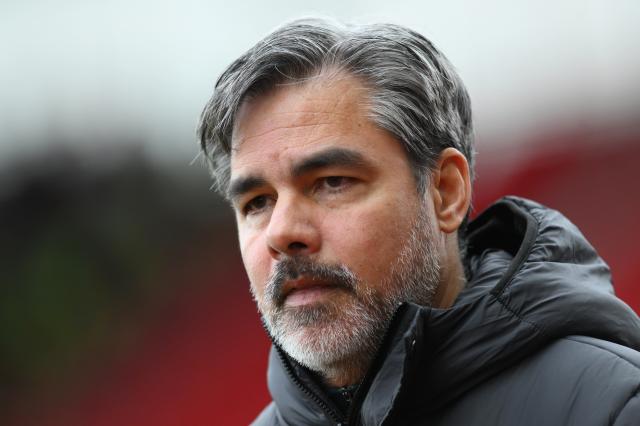
This is a gap David Wagner was appointed to help close when he became the club's head of youth development in the summer of 2025. However, a little over a year into his tenure, Wagner acknowledges that the club's rapid rise since its founding in 2009 has inevitably left parts of the academy playing catch-up with the first team.
“We are super young. We don't have 50, 60, 70 or 100 years of experience in football. We've grown very fast, and our first team has been very successful. So it's totally normal that not every department was able to move forward as quickly as our first team,” Wagner told Bulinews.com at a media roundtable in Leipzig.
Building a pathway into the first team
For an academy prospect to establish himself at first-team level, Wagner believes three factors need to come together.
“To be more productive as an academy by delivering players for the first team, you need to have good academy players. You have to produce top players. That's our job,” Wagner explained.
“You also need to have a sporting managing director who makes space in the first-team squad for academy players. And finally, you need to have a head coach, who picks them or gives them a chance. If you have all three things in place, it will happen,” he added.
He notes that both managing director for sport Marcel Schäfer and head coach Martin Demichelis are committed to creating that route.
“I know Marcel is absolutely keen to open this pathway, to be the first sporting managing director who really pushes to get space for academy players. And then, hopefully, our coach picks the players. Obviously, he already has done so,” Wagner said.
The former Norwich City coach points to 17-year-old Samba Konaté, who has already been given playing time this season, as an example of Leipzig beginning to open that route.
The French forward has an impressive goalscoring record at youth level, and Wagner believes he has the potential to take another step forward and establish himself in the first team this season.
“Yeah, he's a talent,” Wagner stressed.
More competitive football for academy players
Wagner believes the environment in which young players develop also needs to change, particularly when it comes to the amount of competitive football they play.
Over the summer, he initiated a new international U21 tournament, the RBL Cup, which features games against leading academy sides such as Atlético Madrid, FC Porto and Liverpool.
Together with the newly-introduced German U21 league, the UEFA Youth League, the DFB-Nachwuchsliga and the DFB-Pokal, the club’s U19 team will play more than 45 competitive matches this season – an increase of over 40 percent compared with last term.
“From my point of view, we’re not playing enough games at youth level compared to other top nations in Europe,” Wagner said, describing the increase in matches as “a massive step” for the club’s youth development.
“I do think this is a major part in youth development, to have proper games and enough games as well. This is something we have to improve in Germany in general and here in Leipzig as well.”
Drawing on his experience in England, the former Huddersfield Town and Norwich City coach also wants to see a greater emphasis on individual development rather than team results.
“When you’re fixed on a team result, you train over the week to get a team result. But this is first-team thinking, not academy thinking. We have to think: How can we help the players get better in the next weeks? That should be our aim,” Wagner said.
“This is where England is much better than we are in Germany. They are totally focused on individual development programmes,” he continued.
“We are far away from the top class in Germany in our youth development compared to England or France, for example. We have to change the mindset.”
Recruiting earlier in the talent cycle
Creating a stronger development environment is only one part of the challenge. Leipzig must also identify and recruit players early enough, particularly as competition for young talent continues to intensify across Europe.
For managing director for sport Marcel Schäfer, that means moving earlier in the recruitment process.
“I think you need to move even earlier for the players. It’s a bit tricky because we talk about really young humans. But if you see the market right now, players at 18, 19 or 20 who are already adapted in any top five league and rising stars are very, very difficult for us to get,” Schäfer told Bulinews.com.
“That’s a big difference to three, four or five years ago. So maybe we have to go a bit earlier, bring them in our academy and develop them as quickly as possible to our first team.”
Leipzig’s priority is to recruit young players from the city and surrounding region, but Wagner admits their lack of a proven academy pathway can put them at a disadvantage domestically.
“Most of the players, parents or agents look at how many players we have brought into the first team. This is not a card we can play, because we haven’t done this. This means that we don’t have the best reputation in Germany,” Wagner admitted.
“But we have a great reputation in France. We might not get every French kid at 15 or 16 that we give a call, but we sit at the table. Even if PSG are competing with us. Why? Because we have shown that a lot of French players came through our football club and went to top clubs. It’s all about pathways.”
Schäfer raises concerns over player mentality
While recruitment and structure are critical, Schäfer believes another factor shouldn't be overlooked: the mentality of the players themselves.
“Resilience is one of the keys. It’s not a football issue, but a generation issue. You need to fight for your dreams,” Schäfer said.
The Leipzig chief argues that young German players have grown up in an environment where comfort and resources are readily available, which can affect their willingness to make sacrifices.
“They expect you to be perfect here. So you need to be very, very professional on and off the pitch, very disciplined,” Schäfer added, noting that players arriving from abroad often bring a different edge.
“They’re used to fighting for everything. Here in Germany, if you look at our academy, everything is already here.”
Ultimately, the challenge for Leipzig is two-sided: the club must build an environment capable of producing first-team players, but at the same time, these youngsters must have the resilience and determination to seize their chances.
The next step is turning those changes into a senior breakthrough – and finally producing the homegrown player Leipzig have been missing.
